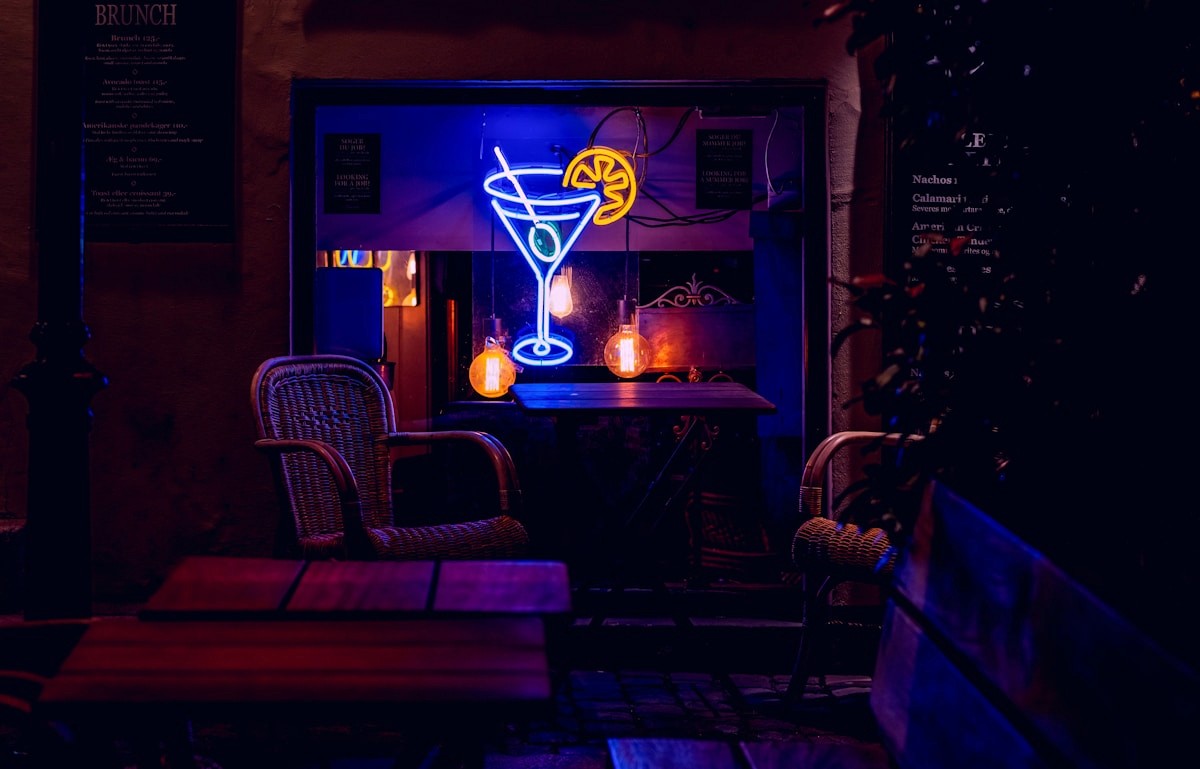
Tucked into a quiet stretch of Tôn Thất Đạm street inside Saigon's old market, Anan Saigon has spent years building one of the most understated reputations in the city's dining scene — the kind of restaurant that's easy to walk straight past if you don't already know it's there, and one that's earned a genuine 1 Michelin Star in spite of, or perhaps because of, that low-key location. Its own published listing is remarkably candid and direct about this exact tension: "If you rush by, many people will surely miss this restaurant honored with 1 Michelin star." That's a remarkable, almost self-deprecating thing for a restaurant to openly say about itself, and it tells you almost everything you need to know about Anan's overall identity — serious, credentialed, entirely unconcerned with flashy street presence or visual spectacle, and quietly confident that the food itself is the only actual draw that matters. This guide thoroughly covers everything Anan Saigon's own listing makes public — its Michelin pedigree, its old-market setting, its atmosphere, its hours, and how to book — built entirely from real, confirmed details.
Most cities' top dining destinations lean into visibility — a grand entrance, a doorman, a queue forming outside as proof of demand. Anan Saigon does almost the opposite, and it's worked. In a market as competitive as Ho Chi Minh City's rapidly growing fine-dining scene, building and sustaining a Michelin-starred reputation from a genuinely hard-to-find address is a rare achievement, one that speaks directly to the strength of what's actually happening in the kitchen rather than anything to do with location or spectacle.
What Is Anan Saigon?
Anan Saigon sits in the Restaurant category, but its own highlight tags immediately set it apart from the rest of that group: 1 Michelin Star and located inside the old market. A Michelin star ranks among the single most significant, internationally recognized, and hardest-earned credentials that any restaurant anywhere in the world can possibly hold, and among the roughly 14 Restaurant-category venues tracked across Saigon's entire nightlife listings, Anan stands out as the only one whose own highlight copy makes that specific, verifiable claim. That single fact alone places it in genuinely rarefied territory within the city's broader dining scene, well ahead of most of its immediate local competition on paper.
The venue's own about copy leans directly into its understated, hidden-in-plain-sight identity: "For a long time, Anan Saigon has been famous as a fine dining restaurant hidden in the heart of the old market on Ton That Dam street with little traffic." That's a genuinely unusual and counterintuitive positioning for any restaurant carrying a Michelin star — most high-credential dining destinations lean into grand entrances, prominent signage, and a sense of occasion visible from the street. Anan instead embraces its old-market setting as part of its identity, turning a location most restaurants would consider a liability into a defining, almost mythologized feature of the experience.
Reinforcing that credential further, the venue's own listing includes a striking claim in its events and highlights data: "Best Restaurant in Vietnam." Combined with the Michelin star, that's about as strong a pair of endorsements as any single restaurant in the country can claim, and it firmly establishes Anan Saigon not just as a solid dinner option, but as one of the most credentialed dining destinations in the entire city, let alone its own old-market neighborhood.
It's worth pointing out how rare it is for a single restaurant to hold both credentials simultaneously. A Michelin star reflects an international evaluation standard, applied consistently across dozens of countries and cities; a "Best Restaurant in Vietnam" title, by contrast, reflects standing specifically within the local market. Anan's own copy claims both, suggesting a restaurant that has managed to satisfy an internationally rigorous culinary standard while also becoming a genuine point of national pride and recognition — a combination that few restaurants anywhere achieve at the same time.
Atmosphere & Design
Anan's location inside Saigon's old market is central to its whole identity, and it shapes the atmosphere in a specific, deliberate way. Old market buildings scattered across Vietnam typically carry a distinct, unmistakable architectural character all their own — weathered facades, a genuine sense of accumulated history, narrow surrounding streets that predate modern urban planning — and Anan's own published copy treats that historic old-market setting not as a compromise or a limitation, but instead as a genuine asset in its own right — a defining part of what makes finding and experiencing the restaurant feel like a real discovery, rather than simply another routine dinner reservation booked through an app.
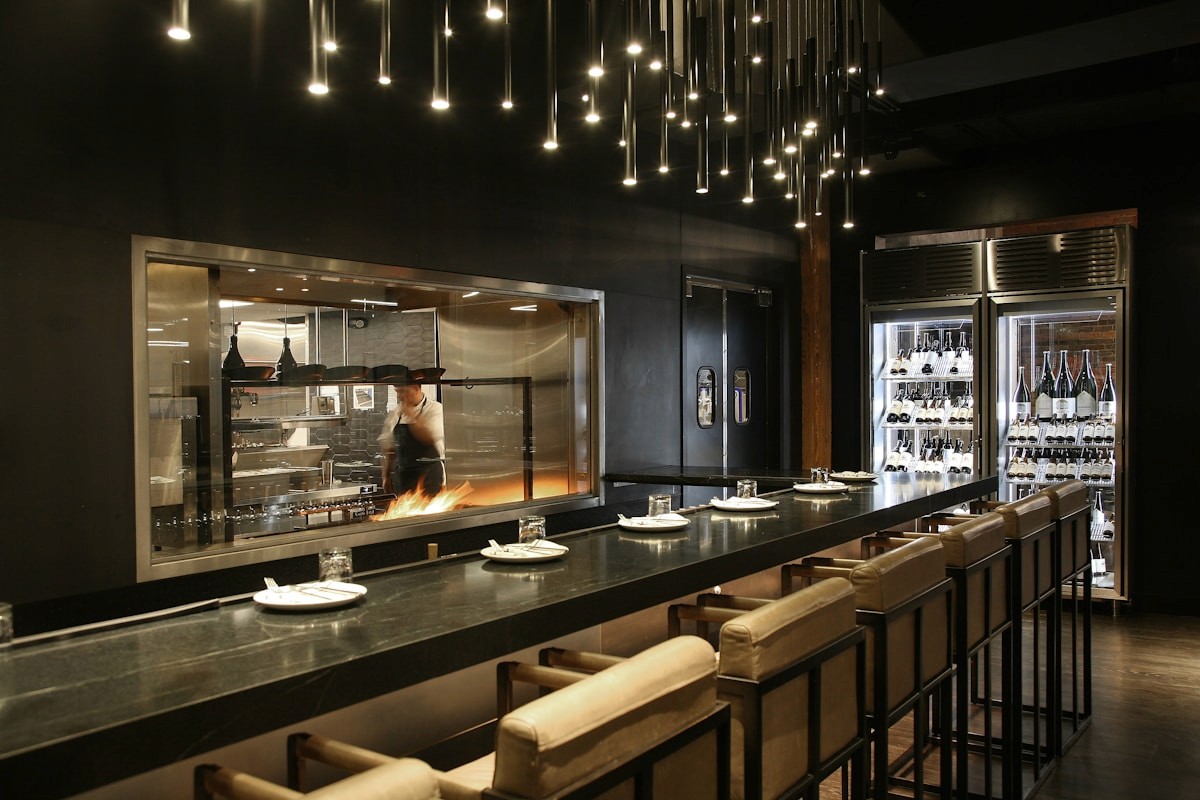
That "hidden in plain sight" quality is reinforced by the venue's own #CorporateChill vibe tag — polished and considered, but without the loud, see-and-be-seen energy of some of the city's more prominent dining destinations. Combined with the old-market setting, the overall picture that emerges is of a restaurant that has built its entire reputation almost exclusively on the strength of its food and genuine word of mouth, rather than on street-level visual spectacle, an imposing entrance, or heavy marketing spend.
Perhaps the single most notable and unexpected detail in Anan's entire own listing is its dress code, tagged simply #CasualOnly — a genuinely unusual, almost countercultural policy for any restaurant carrying a Michelin star. Many restaurants at this credential level lean toward formal or smart-casual dress expectations; Anan's explicit casual policy suggests a restaurant confident enough in its food and reputation that it doesn't need a formal dress code to signal seriousness. That's entirely consistent with the venue's overall "hidden gem" positioning, running through every single level of the experience: substance over ceremony, quiet confidence over loud display, and consistent quality over any kind of formal theater.
It's a useful contrast to hold in mind alongside Akuna, another Michelin-adjacent, chef-driven District 1 restaurant covered elsewhere in this guide series, which carries a formal #LuxuryGentleman dress code inside a major international hotel. Two restaurants, both firmly at the serious end of Saigon's dining scene, arriving at their own credibility through almost opposite routes — one through hotel-backed polish and formality, the other through old-market authenticity and deliberate casualness. That range is itself a reflection of how varied Saigon's top-tier dining scene has become.
What to Expect
The Michelin Credential
Anan Saigon's 1 Michelin Star is its single most important credential, and it's worth understanding what that actually signals for visitors deciding where to spend an evening. The Michelin Guide's star system is one of the most rigorous and internationally recognized restaurant evaluation frameworks in the world, and a single star specifically denotes a restaurant offering genuinely excellent cooking, worth a stop on its own merits. For a restaurant to earn that distinction while operating from a low-traffic street inside an old market — rather than a prominent, purpose-built fine-dining space — is a particularly strong signal of the kitchen's actual quality, since the credential clearly wasn't earned through location or visual spectacle.
Michelin inspectors are famously anonymous, evaluating restaurants without announcing themselves or accepting special treatment, which means a star reflects the actual, repeatable quality of a meal any ordinary guest might receive, not a one-off showcase dinner staged for a known critic. That anonymity is part of what makes the credential so meaningful internationally, and it applies equally to a restaurant operating from a prominent downtown tower or, as in Anan's case, a quiet corner of an old market building most passersby would never think to check.
The venue's own additional claim of being the "Best Restaurant in Vietnam" further underscores this reputation. This guide won't invent specific dishes, tasting menu details, or pricing beyond what's published in Anan's CMS listing, but the combination of these two credentials — a Michelin star and a "best in Vietnam" claim — gives visitors a genuinely clear, well-substantiated reason to actively seek the restaurant out despite its deliberately unassuming, low-key location.
Dress Code
Anan's #CasualOnly dress code stands out precisely because of how it contrasts with what visitors might expect from a Michelin-starred restaurant. There's no need to dress up for a night here — visitors can show up in whatever they're already wearing, whether that's a day of sightseeing attire or standard evening wear, without worrying about a formal dress requirement at the door. This makes Anan a genuinely accessible entry point into fine dining for visitors who might otherwise feel that Michelin-level dining requires a level of formality they're not prepared for.
Who It's Best For
Anan Saigon is an obvious pick for visitors specifically seeking out credentialed, serious fine dining — food enthusiasts tracking Michelin-starred restaurants across a trip, or anyone who wants to experience what's been recognized as one of Vietnam's best restaurants. Its casual dress code and old-market setting also make it a strong fit for visitors who want a genuinely excellent meal without the formality or ceremony often associated with top-tier dining, and its #CorporateChill vibe tag suggests it handles both intimate dinners and slightly larger, more social groups comfortably.
It's a somewhat less natural fit for visitors specifically seeking a rooftop view, a lively bar scene, or a purely spontaneous, no-planning-required evening — Anan's identity is built around a specific, deliberate kind of dining experience rather than casual nightlife. Visitors whose evening plans center more on drinks and atmosphere than on the meal itself may find other nearby venues, several of which are covered in the Nearby Nightlife section below, a better match for that specific mood.
Best Time to Visit
Anan's published opening hours run 18:00 to 02:00, an evening-into-late-night window consistent with much of the city's dining and nightlife scene. Given the restaurant's significant Michelin pedigree and its own frank description of the surrounding street as having "little traffic," an early evening arrival is quite likely to deliver a noticeably calmer, more considered, and more attentive overall dining experience, with the kitchen and front-of-house team able to give full attention to a smaller number of tables.
The venue's listing doesn't publish specific peak-hour data or closed days, so this guide won't speculate beyond the stated hours. Given the restaurant's significant credentials — a Michelin star and a "Best Restaurant in Vietnam" claim — it's reasonable to expect strong demand for tables, particularly on weekends, and booking ahead via the venue's own website or Zalo contact is strongly advisable rather than relying on a walk-in.
Because Anan's own copy specifically describes its street as having "little traffic," it's also worth planning arrival time with a little extra buffer, particularly for first-time visitors relying on a ride-hailing app rather than local knowledge of the old market's layout. Arriving a few minutes early rather than rushing in right at a reservation time also fits the restaurant's own understated, unhurried identity far better than a last-minute dash through the market's narrower streets.
Getting There
Anan Saigon is located at 89 Tôn Thất Đạm, Bến Nghé, Quận 1, TP. HCM — inside the city's old market, on a street the venue's own copy describes as having little traffic. That's a meaningful navigation note: this isn't a restaurant with a prominent street-level presence on a major thoroughfare, but one set within a historic market building that visitors should approach expecting to actively look for, rather than stumble upon casually.
Using a ride-hailing app's map pin, rather than relying purely on the street address, is the most reliable way to find the exact entrance, particularly given the restaurant's own acknowledgment that it's easy to miss if you're moving quickly through the area. Once inside Bến Nghé's old market district itself, Anan sits within genuinely easy reach of several of District 1's other most notable restaurants, making it entirely realistic for visitors to explore the surrounding dining scene either before or immediately after a meal at Anan itself.
For visitors staying at hotels elsewhere in District 1, the trip to Anan is generally short — the old market sits well within the district's dense core, and a taxi or ride-hailing motorbike typically covers the distance in well under fifteen minutes from most central addresses. The real challenge isn't distance, it's precision: pinpointing the exact entrance down to the correct door within the old market building, which is why a saved map pin or a direct link from the restaurant's own website is worth having on hand before setting out.
Nearby Nightlife
The old market area and surrounding Bến Nghé streets host a genuinely strong cluster of District 1's best dining destinations alongside Anan:
Akuna, set inside Le Méridien Saigon, offers a different but equally chef-driven concept — built around Chef Sam Aisbett's culinary artistry in a considerably more formal, hotel-set atmosphere, tagged the same #CorporateChill as Anan. Pairing Anan's hidden, casual Michelin-star experience with Akuna's polished hotel dining gives visitors a genuine sense of the range within Saigon's top-tier restaurant scene.
Esta Saigon, with its open kitchen and distinctive "Night Forest" decor across 35 seats, offers another intimate, design-forward dining option nearby, also #CorporateChill.
Quince Saigon rounds out the neighborhood's open-kitchen dining options, with a wood-fired oven and a private dining room for 14 guests — a solid choice for a group dinner near Anan.
Vietnam House, set inside a historic French-era building and helmed by Chef Luke Nguyễn, offers a heritage-focused counterpoint to Anan's own hidden-market identity — both restaurants draw meaningfully on their physical settings as part of their overall dining concept, just in very different ways.
For visitors who want to extend the evening with drinks after dinner, Chill Skybar, with its 360-degree panoramic view, and Hybrid Saigon, a modern cocktail bar tagged #ChillHop, both sit within the same general area, offering a natural after-dinner stop once a meal at Anan wraps up.
Yakiuo Ishikawa, with its distinctive meatless yakiniku and seafood omakase concept backed by three generations of family heritage, offers yet another serious, credentialed dining option in the same general area — a genuinely useful reminder that Anan's own Michelin star, while still rare within the city as a whole, sits within a genuinely deep and growing bench of ambitious, chef-driven restaurants all clustered around this particular part of District 1's old market district.
Taken together, this small stretch of Bến Nghé and the surrounding old market streets may represent the single highest concentration of serious, internationally credentialed dining in the entire city — a genuinely remarkable, almost improbable amount of concentrated culinary ambition packed into just a handful of blocks, all effectively anchored by Anan's own hard-earned Michelin star sitting right at its center.
For visitors with only one or two dinners to spare in Saigon, this concentration of talent creates a real, welcome dilemma. Rather than crossing the city to sample its top restaurants one by one, a visitor staying anywhere near Bến Nghé's old market district could realistically plan an entire multi-day food itinerary — Anan for a Michelin-starred meal, Akuna for hotel-backed chef artistry, Vietnam House for heritage Vietnamese cooking, and Yakiuo Ishikawa for a specialized omakase experience — without ever needing more than a short walk or a brief ride between stops, an itinerary that would be genuinely difficult to replicate with this level of quality and variety in most other cities of comparable size.
Frequently Asked Questions
Does Anan Saigon have a Michelin star?
Yes — Anan Saigon's own official listing directly confirms 1 Michelin Star, standing as one of the single most significant, internationally recognized culinary credentials that any restaurant anywhere in the entire city currently holds.
What are Anan Saigon's opening hours?
Anan is open from 18:00 to 02:00 every night, according to its own officially published listing, covering both an early dinner service and a considerably later closing time.
Is there a dress code at Anan Saigon?
No formal dress code whatsoever — the venue's own official listing marks its policy plainly as #CasualOnly, a notably relaxed and welcoming expectation for any restaurant carrying a Michelin star. Visitors can dress entirely comfortably, in whatever they're already wearing, without needing to worry about a formal attire requirement at the door.
Where exactly is Anan Saigon located?
The full address is 89 Tôn Thất Đạm, Bến Nghé, Quận 1, TP. HCM, located directly inside Saigon's historic old market building. The venue's own copy directly notes that the surrounding street has genuinely little traffic, so it's well worth actively navigating toward with a precise map pin rather than simply expecting to spot it casually while walking or driving past.
How do I book a table at Anan Saigon?
The venue lists a direct Zalo contact specifically for bookings and general inquiries, and it also maintains its own dedicated website at anansaigon.com for reservations, current menu information, and any additional detail visitors might need before their visit.
Is Anan Saigon considered one of the best restaurants in Vietnam?
Its own official listing states exactly that quite directly, citing "Best Restaurant in Vietnam" alongside its already significant Michelin Star credential — two of the single strongest, most credible endorsements any restaurant anywhere in the entire country can realistically claim to hold.
Is Anan Saigon hard to find?
Yes, by its own frank admission — the venue's own published copy explicitly and directly warns that visitors moving quickly through the surrounding area may well miss it entirely, given its historic old-market setting on a genuinely low-traffic street. Using a precise map pin rather than the street address alone is the safest way to find it.
Does Anan Saigon accept walk-ins?
The venue's own official listing provides both a Zalo contact and its own dedicated website specifically for handling bookings, strongly suggesting that advance reservations are the clearly recommended way to secure a table, particularly given its Michelin-star reputation, its "Best Restaurant in Vietnam" credential, and the genuinely significant demand that powerful combination of credentials generates on virtually any given night of the week.
Is Anan Saigon good for a special occasion?
Yes — its Michelin star and "Best Restaurant in Vietnam" credential make it a genuinely strong choice for marking a special occasion, while its casual dress code keeps that celebration from feeling stiff or overly formal, an unusual and welcome combination for a restaurant operating at this level of international recognition.
What makes Anan Saigon different from other Michelin-recognized restaurants in Saigon?
Its particular combination of a genuine, hard-earned 1 Michelin Star credential together with a low-key old-market setting and a notably relaxed #CasualOnly dress code forms a genuinely distinctive and fairly rare combination overall — many Michelin-level restaurants elsewhere lean heavily into formality and prominent, easy-to-find locations, while Anan deliberately, and quite consistently, does the opposite on both of those fronts at once.
Can I get a table at Anan Saigon without booking in advance?
Given its significant Michelin-star reputation and its likely popularity among both locals and visiting food enthusiasts, walking in without any reservation at all carries a genuinely real risk of being turned away entirely, especially on weekend evenings or during peak dinner hours. Booking ahead through the venue's website or Zalo contact is the safer approach, and it also allows visitors to confirm party size, timing, and any specific requests well before the evening itself, rather than negotiating those details at the door.
Does Anan Saigon serve Vietnamese cuisine?
The venue's own published CMS listing doesn't specify its exact cuisine style, culinary tradition, or detailed menu structure, so this guide deliberately won't speculate or guess on any specific individual dishes. Visitors interested in the exact culinary concept should check the restaurant's own website for current menu details, since this guide is deliberately limited to what Anan's own CMS listing itself confirms rather than guessing at specific dishes or ingredients.
What Michelin Recognition Actually Means in Saigon
The Michelin Guide's arrival in Vietnam marked a genuinely significant moment for the country's dining scene, extending the same rigorous evaluation framework applied to restaurants in Paris, Tokyo, and New York to a market that had, until recently, operated largely outside that particular international spotlight. A single Michelin star specifically recognizes a restaurant for high-quality cooking worth a special visit — a meaningfully different, considerably more selective bar to clear than general popularity, a high volume of online reviews, or simply a crowded dining room on a busy Friday night would suggest on their own. Popularity and quality are related but far from identical measures — a restaurant can draw large crowds through marketing, location, or trend appeal without necessarily delivering the kind of consistently excellent cooking Michelin inspectors are specifically trained and paid to evaluate.
For a restaurant like Anan to earn that internationally significant recognition while operating from a genuinely low-visibility street inside an old market building, rather than a purpose-built fine-dining space in a more prominent, easily reached location, says something quite specific about how the credential was actually earned: almost entirely on the strength of what actually comes out of the kitchen, with little assistance from location, décor spectacle, or marketing visibility. That's a genuinely different path to a Michelin star than many recognized restaurants take, and it reinforces the "hidden gem" framing that runs through Anan's own public identity from top to bottom.
For visitors building a food-focused itinerary around Saigon, a Michelin-starred meal at Anan offers a specific kind of credibility check — a chance to sample cooking that's been evaluated against a genuinely international standard, in a city whose dining scene is often discussed primarily in terms of street food and casual dining rather than formal culinary recognition. Anan's own deliberately casual dress code makes that specific kind of experience considerably more accessible to a broader range of visitors than it might be elsewhere in the world, removing one of the more common barriers — the need for formal attire — that can make Michelin-level dining feel intimidating or exclusive to first-time visitors.
Comparing Anan to Saigon's Broader Fine-Dining Scene
Ho Chi Minh City's fine-dining scene has grown substantially over the past decade, drawing serious culinary talent, ambitious hotel-backed concepts, and an increasing number of internationally trained chefs choosing to build their careers in the city. Within that expanding field, restaurants tend to differentiate themselves through one of a handful of strategies: a named celebrity chef, a striking architectural setting, a hotel brand's backing, or — as with Anan — a formal external credential like a Michelin star.
What makes Anan a particularly interesting case study within that landscape is how little it relies on the other common differentiators. It doesn't lean on a hotel brand's built-in trust, since it operates as a standalone restaurant. It doesn't lean on architectural spectacle, given its unassuming old-market setting. And while its own listing doesn't name a specific celebrity chef the way some competitors do, its own Michelin star effectively and quite efficiently serves the exact same trust-building function that a famous chef's name might otherwise serve elsewhere in the world — an external, credible signal that the food is worth the trip, even without relying on any of the usual visual cues a casual passerby might otherwise use to judge a restaurant's quality and seriousness purely from the street outside.
For visitors trying to decide how to allocate a limited number of dinners across a Saigon trip, that distinction is worth weighing carefully. A restaurant backed by a famous chef's name or a luxury hotel brand offers a certain kind of reassurance, built on reputation and resources. A restaurant like Anan, credentialed instead by an independent, internationally rigorous evaluation body rather than its own internal marketing efforts, offers a genuinely different kind of reassurance to prospective diners — one that's arguably considerably harder to manufacture through advertising alone, and for many serious diners, more meaningful precisely because of that difficulty.
None of this is to say one approach is objectively superior to the other — a hotel-backed named-chef restaurant and a hidden, Michelin-credentialed old-market restaurant can both deliver an exceptional meal, and Saigon's dining scene is genuinely richer for having strong examples of each model operating within a short distance of one another. What matters for a visitor planning a trip is understanding which kind of experience each restaurant is actually offering before booking, so expectations line up with what the venue itself is trying to deliver. Anan's own copy makes that job easy: understated, credentialed, and entirely unconcerned with putting on a show for people who happen to be walking past.
It's also worth remembering that credentials like a Michelin star aren't handed out permanently — restaurants are re-evaluated on an ongoing basis, and maintaining a star over a sustained period requires consistent execution night after night, not a single strong opening season. Anan's own copy describing itself as having "for a long time" held its reputation suggests a restaurant that has proven its consistency over years rather than months, which for a visitor deciding where to spend a limited dining budget is arguably a more reassuring signal than the star itself: proof the quality has actually held up over time, under repeated, anonymous scrutiny.
The Old Market as a Dining Destination
Saigon's old market buildings, including the one housing Anan, represent a distinct category of dining real estate within the city — repurposed historic structures that carry genuine architectural and cultural character, quite different from the modern towers and purpose-built commercial spaces that house much of the city's newer, more visibly ambitious dining scene. Old markets across Vietnam were typically built as functional commercial hubs, designed for trade and daily life rather than dining ambiance, and their gradual repurposing into restaurant and hospitality spaces represents a genuine shift in how the city thinks about its own historic commercial architecture. Restaurants that choose to operate from these buildings, rather than a more conventional storefront or hotel space, are making an implicit statement about valuing atmosphere, authenticity, and a genuine sense of history alongside the food itself, rather than optimizing purely for convenience or visibility.
That choice comes with real trade-offs, which Anan's own copy addresses directly: reduced street visibility, less foot traffic, and a genuine risk that potential diners simply won't notice the restaurant exists. That Anan has built a Michelin-starred reputation despite those trade-offs is a testament to how effectively word of mouth, press coverage, and now digital discovery can overcome a lack of street-level visibility for a restaurant confident enough in its own quality. In an earlier, pre-internet era, a restaurant this deliberately and consistently hidden away might have genuinely struggled to build any kind of broad reputation beyond a small, tight circle of in-the-know locals; in the age of online reviews, food journalism, and platforms specifically built to surface exactly this kind of hidden destination, that same obscurity has instead become part of the story people tell each other about the place. For visitors who enjoy the sense of discovery that comes with tracking down a genuinely hidden dining destination, Anan offers precisely that experience — the payoff of a Michelin-starred meal at the end of a slightly more deliberate hunt to find the door.
There's also a practical upside to the old-market setting that's easy to overlook: privacy and intimacy. A restaurant tucked away from major foot traffic naturally attracts a self-selecting crowd of diners who specifically sought it out, rather than passersby who wandered in on a whim. That tends to produce a calmer, more focused dining room than a restaurant positioned to catch casual street traffic, an atmosphere that suits the kind of considered, multi-course dining experience a Michelin-starred kitchen is typically built to deliver, without the distraction of a room full of onlookers or a constant stream of foot traffic passing by the windows.
This model isn't unique to Saigon — hidden, hard-to-find restaurants earning serious culinary credentials is a pattern that repeats in food cities around the world, from unmarked doors in Tokyo's back alleys to converted warehouse spaces in major Western capitals. What's notable about Anan's version of this story is how directly the restaurant's own marketing leans into it, rather than treating the difficulty of finding the place as an unfortunate side effect to downplay. Turning a real logistical challenge into a selling point takes genuine confidence, and it's one more piece of evidence that Anan knows exactly what it is and isn't trying to be everything to everyone.
Very few individual dining stories anywhere in Saigon manage to capture the city's own inherent contradictions quite as neatly and completely as Anan's own story genuinely does. A humble market building originally constructed purely for everyday commerce, on a street its own operator openly and honestly describes as easy to overlook entirely, has quietly and steadily produced one of the single most internationally credentialed dining rooms found anywhere in the entire country. That's simply not a story any restaurant could ever manufacture through marketing spend or clever advertising alone, no matter how large the budget — it takes many years of genuinely consistent, disciplined cooking, an anonymous inspector's careful visit, and a real willingness to let the food itself speak, rather than leaning on the address. For anyone building a genuinely serious, food-focused trip to Ho Chi Minh City, that particular combination is exactly what makes Anan so worth the extra few minutes it inevitably takes to actually find the door.
Ready to actively track down one of Saigon's most understated, genuinely Michelin-starred restaurants? Anan Saigon's full venue page has everything you need to plan your visit, and you can book directly and easily through either the venue's own official website or its dedicated Zalo contact, whichever channel is more convenient for you. If you'd rather have SAIGONNIGHTLIFE.AI help you plan and build a complete, full evening out — pairing a Michelin-starred dinner at Anan with a nearby drinks stop like Chill Skybar or Hybrid Saigon afterward — simply head over to our own dedicated booking page to get everything started right away. Either way, this genuinely Michelin-starred restaurant hidden deep inside Saigon's historic old market is well worth the extra effort of actively seeking out for yourself.